

How to Inject Ketamine: An In-Depth Guide to Proper and Safe Administration
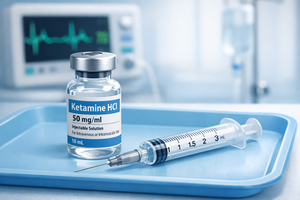 How to Inject Ketamine : An In-Depth Guide to Proper and Safe Administration
The success of these treatments depends heavily on the route of administration. While oral and nasal options exist, injectable ketamine remains the gold standard for clinical settings due to its high bioavailability and predictable pharmacokinetics.
In a psychiatric setting, a common dose for depression is 0.5 mg/kg administered over 40 minutes. For chronic pain, doses are often higher and administered over several hours.
The primary drawback of IM administration is the lack of “off-switch.” Once the full dose is injected into the muscle, it will be absorbed at a rate determined by the patient’s local blood flow. This makes it more difficult to manage intense dissociative experiences or sudden spikes in blood pressure.
| Feature | Intravenous (IV) | Intramuscular (IM) |
| :— | :— | :— |
| Bioavailability | 100% | ~93% |
| Onset of Action | Immediate (seconds) | 1–5 minutes |
| Duration of Effect | Highly controllable via infusion | 30–60 minutes |
| Dose Titration | Excellent (Real-time) | Limited (Fixed dose) |
| Clinical Setting | Requires IV setup and pump | Simple syringe injection |
| Common Use | TRD, Chronic Pain, Surgery | Emergency sedation, TRD |
* Psychiatric History: Screening for history of psychosis or active substance use disorders.
* Cardiovascular Health: Checking for uncontrolled hypertension or recent cardiac events, as ketamine is a sympathomimetic agent that increases heart rate and blood pressure.
* Medication Review: Identifying potential interactions with other sedatives, benzodiazepines, or CNS depressants.
* Vital Signs: Pulse oximetry, blood pressure (every 10–15 minutes), and heart rate.
* Level of Consciousness: Assessing the patient’s degree of dissociation and ensuring they remain comfortable.
* Post-Treatment Observation: Patients should remain in the clinic until they are fully alert and stable, typically 30 to 60 minutes after the effects have subsided.
The Evolution of Ketamine in Modern Medicine
Since its approval by the FDA in 1970, ketamine has been a staple in emergency medicine and veterinary practices due to its unique ability to induce “dissociative anesthesia.” Unlike traditional anesthetics, ketamine maintains respiratory drive and cardiovascular stability, making it an ideal choice for trauma and pediatric surgery. In recent years, the medical community has witnessed a paradigm shift, with low-dose ketamine infusions becoming a cornerstone for treating treatment-resistant depression (TRD), post-traumatic stress disorder (PTSD), and various neuropathic pain syndromes.
The success of these treatments depends heavily on the route of administration. While oral and nasal options exist, injectable ketamine remains the gold standard for clinical settings due to its high bioavailability and predictable pharmacokinetics.
Primary Injection Routes: IV vs. IM : How to Inject Ketamine
When discussing how to inject ketamine, medical professionals typically focus on two primary routes: intravenous (IV) and intramuscular (IM). Each route offers distinct advantages and is chosen based on the specific clinical goals and the patient’s needs.Intravenous (IV) Administration: The Clinical Gold Standard
Intravenous administration involves the direct delivery of ketamine into a patient’s vein, usually via an infusion pump. This method is widely considered the most effective for psychiatric and pain management applications for several reasons:- 100% Bioavailability: Because the medication enters the bloodstream directly, none of it is lost to first-pass metabolism in the liver or incomplete absorption through tissues [1].
- Precise Titration: Clinicians can adjust the rate of infusion in real-time. If a patient experiences significant distress or an adverse reaction, the infusion can be slowed or stopped immediately, providing a level of safety that other routes cannot match.
- Predictable Plasma Levels: IV delivery ensures a steady concentration of ketamine in the brain, which is crucial for achieving the “therapeutic window” necessary for neuroplasticity and rapid antidepressant effects.
In a psychiatric setting, a common dose for depression is 0.5 mg/kg administered over 40 minutes. For chronic pain, doses are often higher and administered over several hours.
Intramuscular (IM) Administration: Efficiency and Accessibility on How to Inject Ketamine
Intramuscular injection involves injecting ketamine into a large muscle group, such as the deltoid (shoulder) or the vastus lateralis (thigh). This route is frequently used in emergency medicine for rapid sedation or in clinics where setting up an IV line may be impractical or distressing for the patient.- High Bioavailability (93%): While slightly lower than IV, IM absorption is still very high and much more efficient than oral or sublingual routes [1].
- Rapid Onset: Effects typically begin within 1 to 5 minutes, making it highly effective for acute situations.
- Simplicity: IM injections do not require the specialized equipment or the prolonged setup time associated with IV infusions.
The primary drawback of IM administration is the lack of “off-switch.” Once the full dose is injected into the muscle, it will be absorbed at a rate determined by the patient’s local blood flow. This makes it more difficult to manage intense dissociative experiences or sudden spikes in blood pressure.
Detailed Comparison of Injection Routes
To better understand the differences, the following table summarizes the key characteristics of IV and IM ketamine administration:| Feature | Intravenous (IV) | Intramuscular (IM) |
| :— | :— | :— |
| Bioavailability | 100% | ~93% |
| Onset of Action | Immediate (seconds) | 1–5 minutes |
| Duration of Effect | Highly controllable via infusion | 30–60 minutes |
| Dose Titration | Excellent (Real-time) | Limited (Fixed dose) |
| Clinical Setting | Requires IV setup and pump | Simple syringe injection |
| Common Use | TRD, Chronic Pain, Surgery | Emergency sedation, TRD |
Safety Protocols and Best Practices
Safety is the most critical component when learning how to inject ketamine. Because ketamine can cause significant changes in blood pressure, heart rate, and perception, it must only be administered in a controlled medical environment.Pre-Injection Screening
Before any injection, a comprehensive medical screening is mandatory. This includes:* Psychiatric History: Screening for history of psychosis or active substance use disorders.
* Cardiovascular Health: Checking for uncontrolled hypertension or recent cardiac events, as ketamine is a sympathomimetic agent that increases heart rate and blood pressure.
* Medication Review: Identifying potential interactions with other sedatives, benzodiazepines, or CNS depressants.
The Importance of Monitoring
During the administration of ketamine, the patient must be continuously monitored by trained medical staff. Standard monitoring protocols include:* Vital Signs: Pulse oximetry, blood pressure (every 10–15 minutes), and heart rate.
* Level of Consciousness: Assessing the patient’s degree of dissociation and ensuring they remain comfortable.
* Post-Treatment Observation: Patients should remain in the clinic until they are fully alert and stable, typically 30 to 60 minutes after the effects have subsided.