
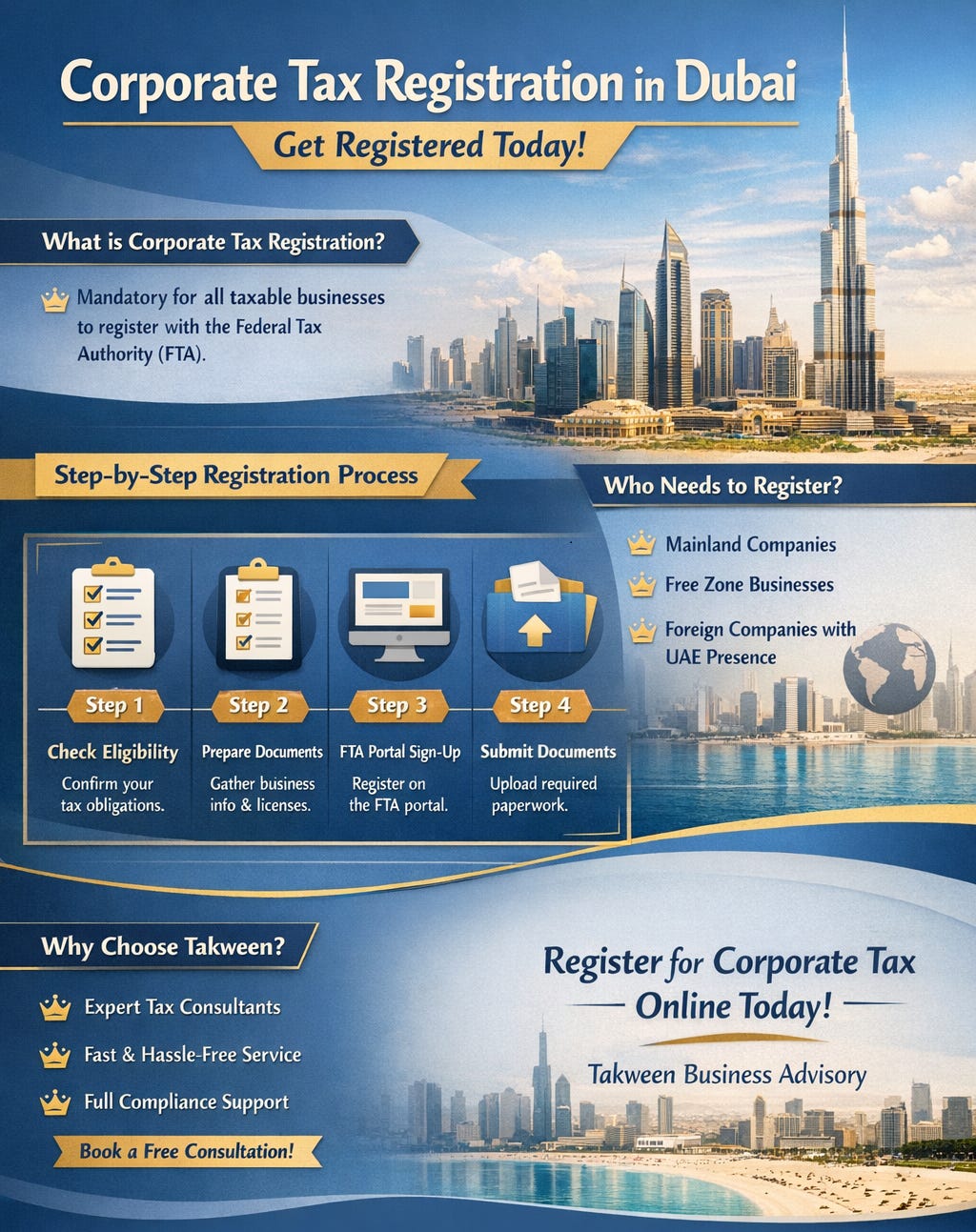
Dubai attracts entrepreneurs from around the world. The city offers strong infrastructure, global trade access, and a business-friendly environment. However, every company must follow financial regulations. One of the most important obligations today is corporate tax registration Dubai.
Businesses that operate in the UAE must understand how the tax system works and when they must complete company tax registration. Many owners rush into registration without understanding the process, documents, and compliance responsibilities. That often creates confusion later.
This guide explains seven important things every business should know before they register for corporate tax. It also explains how to register for corporation tax online and how companies can complete corporate tax registration smoothly.
Understanding Corporate Tax in Dubai

Corporate tax applies to the taxable income of businesses operating in the UAE. The tax framework introduced a standard rate of 9% on taxable profits above the applicable threshold. This rate remains among the lowest corporate tax rates globally, which keeps Dubai attractive for business investment.
Every company operating in the UAE must assess whether it needs company tax registration. Even businesses that expect zero taxable income may still need to register and maintain records.
Corporate tax rules aim to improve transparency and align the UAE with international tax standards. Because of this, authorities expect businesses to complete corporate tax registration Dubai within the required timeline.
According to international tax guidelines from organizations such as the International Monetary Fund and the Organisation for Economic Co-operation and Development, clear corporate tax frameworks help improve transparency and global trade confidence. Businesses that understand these frameworks often avoid compliance problems.
1. Not Every Business Pays the Same Corporate Tax

Many people assume every company pays corporate tax automatically. That is not always true. The tax system includes different rules depending on the business type and taxable profit.
Some businesses may qualify for relief or exemptions depending on their structure and activity. However, most companies must still complete corporate tax registration Dubai even if they expect limited taxable income.
Because of this, businesses should review their structure carefully before they register for corporate tax.
2. Corporate Tax Registration Is Mandatory for Most Companies

Many entrepreneurs delay tax registration because they assume it only applies to large corporations. In reality, the law requires most companies to complete company tax registration once they operate in the UAE.
Businesses that fail to register may face compliance issues or penalties later. Therefore, it is always safer to complete the registration process on time.
Companies can usually register for corporation tax online through the official tax portal once they prepare the required documents.
3. Documentation Plays a Big Role in Registration

Before businesses start corporate tax registration Dubai, they should gather the required documents. These usually include company licenses, shareholder information, and financial details.
Clear documentation helps companies complete the registration faster. Without proper documents, businesses may face delays or verification requests.
Companies that keep organized financial records often complete company tax registration much more smoothly.
4. Understanding Taxable Income Matters

Corporate tax does not apply to total revenue. It applies to taxable profit. That means companies must calculate income after deducting eligible business expenses.
This concept often confuses new entrepreneurs. Many assume tax applies directly to total sales. In reality, accounting records determine the final taxable income.
Understanding this early helps businesses prepare accurate financial statements before they register for corporate tax.
5. Businesses Should Maintain Proper Accounting Records

Accurate accounting is the backbone of corporate tax compliance. Businesses must maintain records that show income, expenses, and financial transactions.
Companies that manage their books regularly face fewer problems during tax filing. Good accounting also helps business owners understand their profitability and financial health.
Experts often recommend building a structured accounting system even before completing corporate tax registration Dubai.
Simplify Your Corporate Tax Registration
Corporate tax registration may seem technical at first, but the process becomes much easier with the right support. Businesses that plan their documentation, understand their obligations, and follow a structured process can complete company tax registration without unnecessary delays.Takween Business Advisory helps companies understand the tax framework and register for corporate tax smoothly. Their professional guidance ensures businesses prepare accurate records, complete registration efficiently, and build a strong foundation for long-term compliance.
Frequently Asked Questions
Who needs corporate tax registration in Dubai?
Most companies operating in the UAE must complete corporate tax registration Dubai, even if their taxable income is low.Can businesses register for corporation tax online?
Yes. Companies can register for corporation tax online through the official tax system once they prepare the required documents.Is company tax registration required for small businesses?
Yes. Small businesses must also complete company tax registration if they operate in the UAE and fall under the tax framework.Conclusion
Corporate tax registration Dubai represents an important step toward financial compliance for businesses operating in the UAE. Companies that understand tax obligations early often avoid confusion and maintain smoother financial operations.When businesses prepare documentation properly and register for corporation tax online through a structured process, they complete company tax registration efficiently. With the right planning and professional support, companies can focus on growth while staying fully compliant with corporate tax regulations.