
Insulin-like Growth Factor Long R3 (IGF-LR3) is a synthetic, stabilized analogue of human IGF-1 created specifically for laboratory research. By altering amino acid sequence and adding stabilizing elements, IGF-LR3 exhibits a significantly extended half-life and improved bioavailability compared with native IGF-1, allowing researchers to probe growth-factor signaling, metabolism, recovery pathways, and anabolic responses with greater experimental convenience and reproducibility. If you encounter searches or listings for IGD LR3 for sale, treat them as starting points for due diligence rather than as instructions — purchasing and using research reagents must follow institutional, legal, and ethical rules.
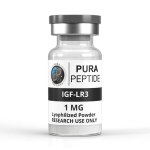
What IGF-LR3 Is: chemistry and core properties
IGF-LR3 is an analog of IGF-1 in which specific amino acids are substituted and/or extended to reduce proteolytic degradation and decrease affinity for IGF-binding proteins (IGFBPs). The consequences of these molecular changes are:- Extended half-life in biological media, which reduces the frequency of application or addition in long-term cell culture and some in vivo models.
- Reduced sequestration by IGFBPs, increasing the fraction of free ligand available to bind IGF receptors.
- Enhanced potency under many experimental conditions, because more ligand is available to engage IGF-1 receptors for longer periods.
Receptor interactions and biological effects
IGF-LR3 primarily signals through the IGF-1 receptor (IGF1R), a receptor tyrosine kinase closely related to the insulin receptor. Activation of IGF1R triggers two major intracellular cascades: the PI3K–AKT pathway (promoting cell survival, protein synthesis, and metabolism) and the RAS–MAPK pathway (involved in proliferation and differentiation). Because of its increased stability and bioavailability, IGF-LR3 is frequently used to:- Stimulate cell proliferation in growth assays.
- Study anabolic signaling and protein synthesis in muscle or other cell types.
- Examine metabolic regulation, including glucose uptake and mitochondrial function in model systems.
- Explore repair and recovery pathways during or after cellular stress.
Practical considerations for researchers using IGF-LR3
When incorporating IGF-LR3 into experiments, there are several non-technical and technical aspects to consider:- Source verification and quality: Always work with vendors that provide batch certificates (COA), purity analysis, and stability data. Listings titled IGD LR3 for sale may appear online; verify vendor legitimacy, confirm intended research use, and ensure shipment complies with institutional procurement rules.
- Storage and handling: Peptides like IGF-LR3 are typically shipped lyophilized and require cold-chain handling. Reconstitution should follow vendor instructions and be performed with sterile technique in a biosafety cabinet if used for cell culture. Avoid repeated freeze–thaw cycles by aliquoting.
- Assay design: Because IGF-LR3 has prolonged activity, plan time points and wash steps accordingly. Include appropriate vehicle controls and consider using IGF-binding protein manipulation or receptor antagonists to confirm specificity.
Data interpretation and common pitfalls
Extended ligand stability can change the temporal dynamics of signaling. For example, a single IGF-LR3 application might sustain activation for hours, complicating interpretation in short-time-course experiments designed around transient IGF-1 spikes. Run pilot studies to establish activation profiles (e.g., phosphorylation of AKT or ERK) before committing to full experimental setups.Conclusion
IGF-LR3 is a valuable tool for research into growth-factor biology, metabolism, and anabolic signaling because of its enhanced stability and bioavailability. If you see the phrase IGD LR3 for sale during literature searches or vendor hunts, use it as a cue to perform rigorous vendor and regulatory checks. Above all, treat IGF-LR3 as a laboratory reagent — design experiments with proper controls, comply with institutional approvals, and avoid any unapproved human or clinical use.Attachments
-
 11-600x600.jpg15.7 KB · Views: 0